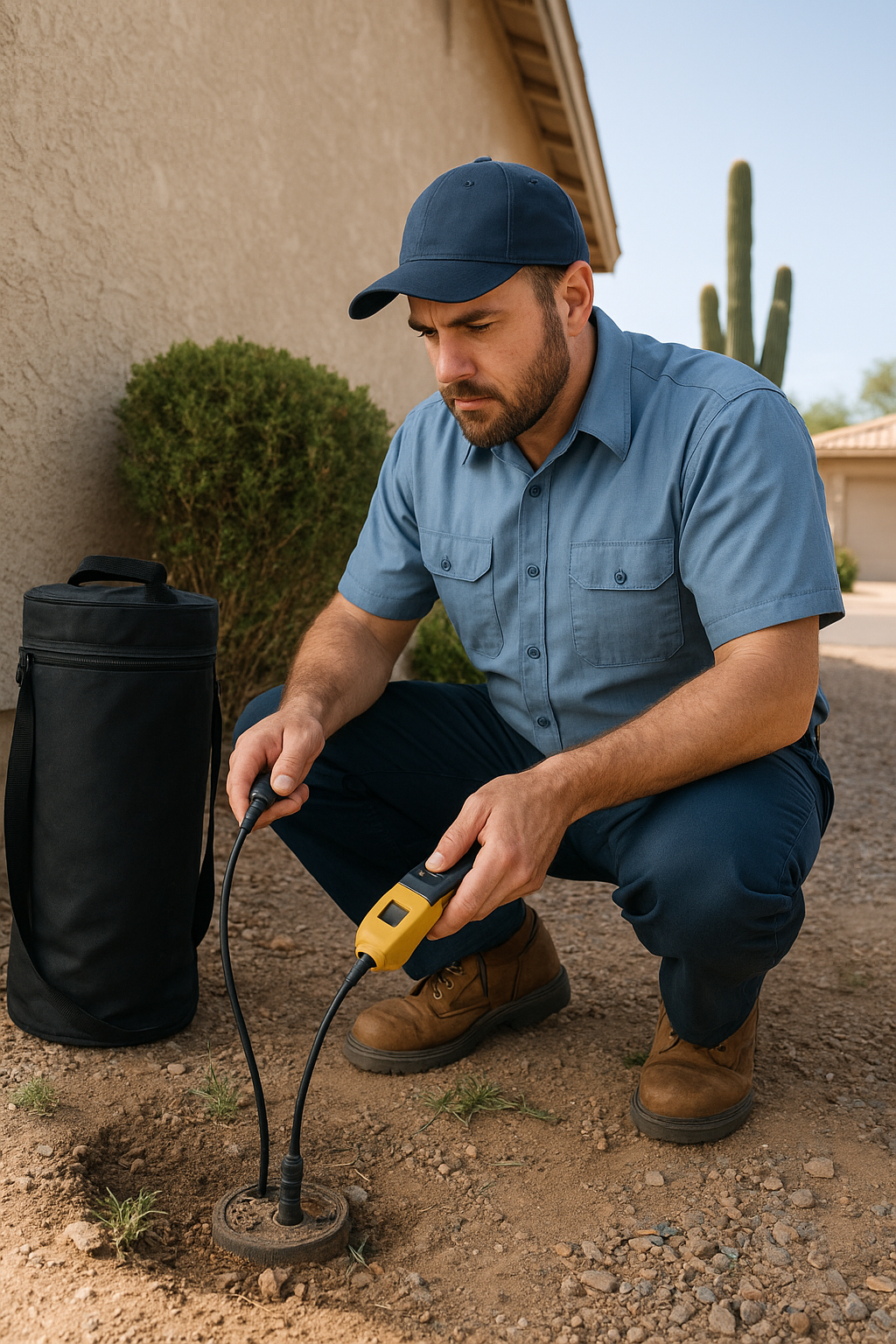
Phoenix homes built before 1980 in neighborhoods like Arcadia and Maryvale often have copper or galvanized lines that corrode faster due to hard water and soil movement in Maricopa County. Extreme summer heat causes pipes to expand and contract daily, creating pinhole leaks that go unnoticed until water pressure drops or slabs show moisture. We use acoustic listening devices and video inspection cameras to trace leaks behind walls or under concrete without tearing out large sections. Homeowners in Camelback East frequently discover leaks near pool equipment or irrigation lines where constant pressure meets shifting desert soil.
Slab leaks are common in Ahwatukee and South Mountain properties because the alkaline soil accelerates pipe degradation and the flat terrain allows water to travel far before surfacing. Our technicians map water flow using pressure testing and thermal imaging to isolate the exact failure point, avoiding unnecessary excavation in finished living areas. Hot desert conditions also stress water heater connections and supply lines, so we check those zones first when residents report warm floors or unexplained humidity. This targeted approach keeps repair costs lower than broad exploratory work.
Regulatory requirements in Phoenix require permits for any slab or main line repair, and we document findings with photos and pressure readings so homeowners can verify the work. Edge cases include leaks near Papago Park or Desert Botanical Garden properties where older irrigation systems intersect with municipal lines. We always test the full system after repair to confirm no secondary leaks exist, especially important during monsoon season when sudden pressure changes reveal hidden weaknesses.
Technician insight
In Phoenix the thing that catches most people out with leak detection is how fast a small pinhole in copper turns into major slab damage once monsoon rains hit the already saturated soil around older Maryvale and Arcadia homes.
Hidden Slab Leak In Arcadia
Homeowner noticed warm floors and rising water bill. Pressure test showed loss on the hot side. Camera revealed a pinhole in copper under the living room slab caused by soil movement. We isolated the line, installed a bypass, and restored service same day.
Leak Detection Services We Offer
✓Slab Leak Detection
Locates leaks under concrete foundations common in older Phoenix homes using acoustic sensors and moisture mapping.
✓Interior Wall and Ceiling Leak Location
Traces hidden pipe leaks behind drywall in Biltmore and Camelback East residences without major demolition.
✓Pool and Spa Leak Detection
Identifies leaks in pool plumbing and equipment lines that lose water quickly in Phoenix summer heat.
✓Irrigation and Main Line Leak Testing
Pressure tests outdoor lines and city connections serving properties near Papago Park and South Mountain.
✓Water Heater Supply Leak Inspection
Checks connections and flex lines on water heaters stressed by daily temperature swings in desert homes.
Leak Detection Cost in Phoenix, AZ
| Service | Typical Range | What Affects It |
|---|---|---|
| Basic Pressure Test And Location | $175–$325 | Single story homes with accessible shutoffs |
| Slab Leak Detection With Camera | $275–$450 | Includes thermal imaging and excavation planning |
| Pool Equipment Line Scan | $225–$375 | Covers pumps, filters, and return lines |
| Multi-Zone Irrigation Test | $150–$275 | Larger yards in Ahwatukee or Maryvale |
Ranges are typical for Phoenix, AZ and confirmed with an exact written quote before any work starts.
How it works
- 1
Initial Pressure Test
We isolate sections of the plumbing system and apply controlled pressure to identify which zone is losing water.
- 2
Acoustic And Camera Survey
Technicians walk the property with listening devices and insert cameras through cleanouts to pinpoint the leak source.
- 3
Mark And Document Findings
Exact leak locations are marked on site and photographed with measurements for the homeowner and any required permits.
- 4
Repair Recommendation And Quote
We present repair options based on access, pipe material, and neighborhood conditions before any work begins.
Pricing
Most leak detection calls fall into a mid-range depending on how many zones must be isolated and whether slab access is required.