2026-08-29 · Ray Callahan
Preventing Pipe Damage During Phoenix Monsoon Season
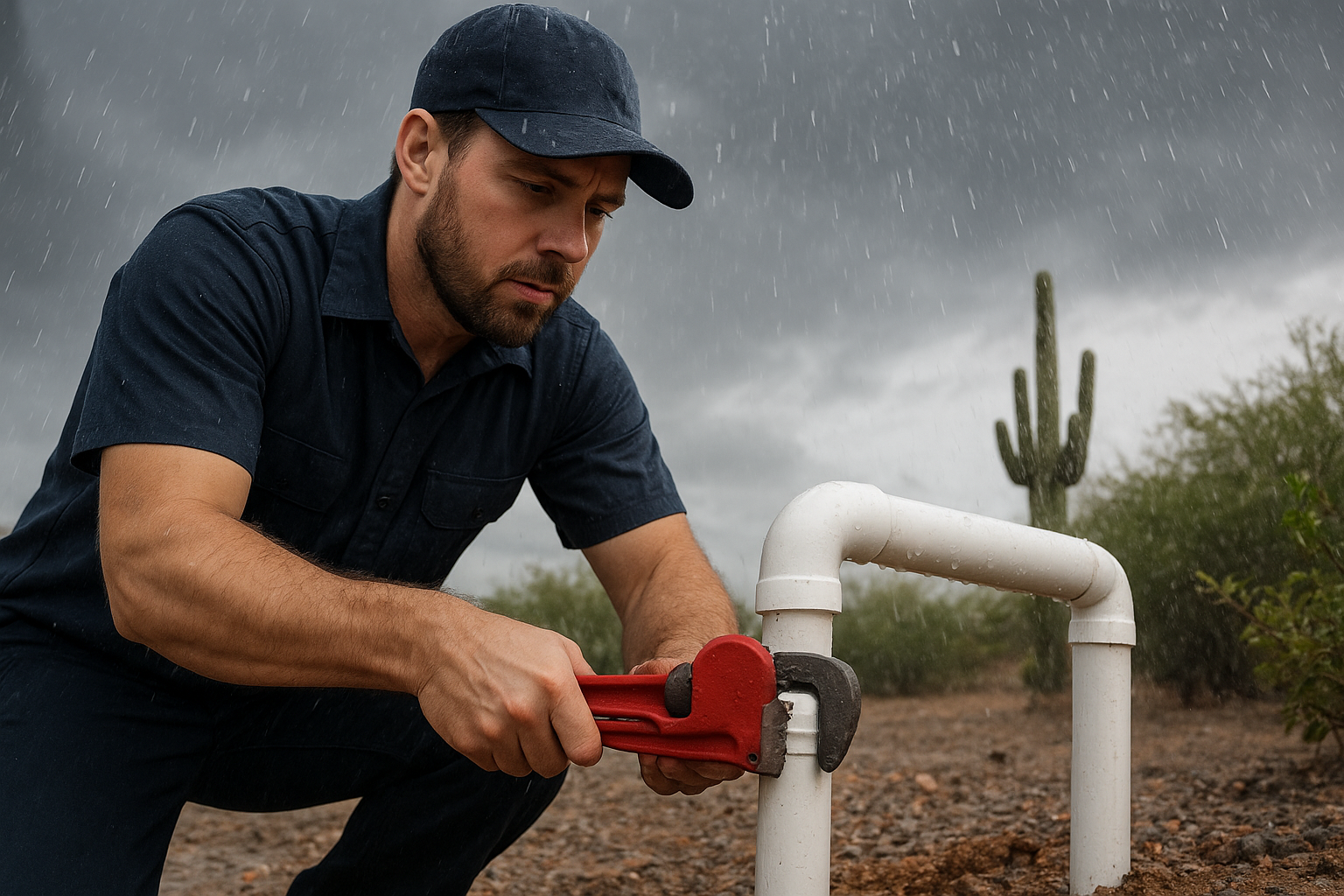
Heavy monsoon rains in Phoenix can crack or displace pipes when water pools against foundations or infiltrates slabs, but regular pre-season inspections and drainage corrections stop most failures before they start.
Checking for Early Signs of Pipe Stress
Walk the perimeter of homes in Arcadia and Biltmore each May and note any new cracks wider than 1/8 inch near hose bibs or cleanouts. Inside, listen for running water when all fixtures are off and check under sinks for damp spots that appear after the first monsoon downpour. In neighborhoods like Maryvale and South Mountain, older galvanized lines often show pinhole leaks once soil shifts from repeated saturation. Schedule professional leak detection if moisture readings rise near slab edges or if water pressure drops suddenly after heavy rain. These checks catch problems while repairs stay minor instead of turning into full slab replacements.
Managing Drainage Around Foundations
Phoenix yards often slope toward the house after years of settling, so monsoon water collects against stem walls and forces pressure on underground lines. Add 4- to 6-inch extensions to downspouts so runoff travels at least 5 feet away from the foundation. Re-grade soil to create a 6-inch drop over the first 10 feet around the house, especially on lots near Papago Park or the Desert Botanical Garden where clay pockets hold water longer. Clear debris from French drains and window wells before July. When standing water remains more than 30 minutes after a storm, the risk of hydrostatic pressure pushing joints apart rises sharply in Camelback East homes built before 1990.
Protecting Outdoor and Exposed Lines
Hose bibs and irrigation manifolds take direct hits during monsoon gusts. Shut off exterior valves and drain lines when forecasts show 1 inch or more of rain in 24 hours. Insulate any above-ground copper or PEX runs with closed-cell foam sleeves rated for 140-degree Phoenix summer heat, then secure them so wind-driven rain cannot loosen joints. In Ahwatukee and near South Mountain, rock mulch can wash away and expose shallow sewer laterals; replace it with compacted decomposed granite to keep soil stable. These steps reduce the chance of a sudden break that sends water into the home during the next storm cell.
Knowing When Repiping Becomes Necessary
Homes in Biltmore and Camelback East with original galvanized or polybutylene lines often reach the point where monsoon pressure exposes multiple leaks within one season. A whole-house repipe using copper or PEX eliminates the weak points that fail under repeated saturation. The process typically takes 3 to 5 days for a 2,000-square-foot house and restores reliable flow without repeated patch repairs. Readers considering this option can review typical timelines in the article How Long Does a Whole-House Repipe Take?. Slab leaks discovered after monsoon flooding frequently lead to the same recommendation once slab leak repair costs exceed half the price of a targeted repipe.
Post-Storm Response Steps
After each monsoon event, check crawl spaces or garages for new damp areas within 24 hours. Turn off the main water valve if pressure fluctuates or if you hear water running in walls. Document any visible soil erosion near the foundation with photos for your plumber. Early intervention in areas like Arcadia or North Central Phoenix keeps small leaks from becoming insurance claims. Consistent attention to grading, exterior valves, and pre-season leak scans protects pipe integrity through the entire July-to-September monsoon window without unnecessary disruption.