2026-08-29 · Ray Callahan
How to Spot a Slab Leak Before It Damages Your Phoenix Home
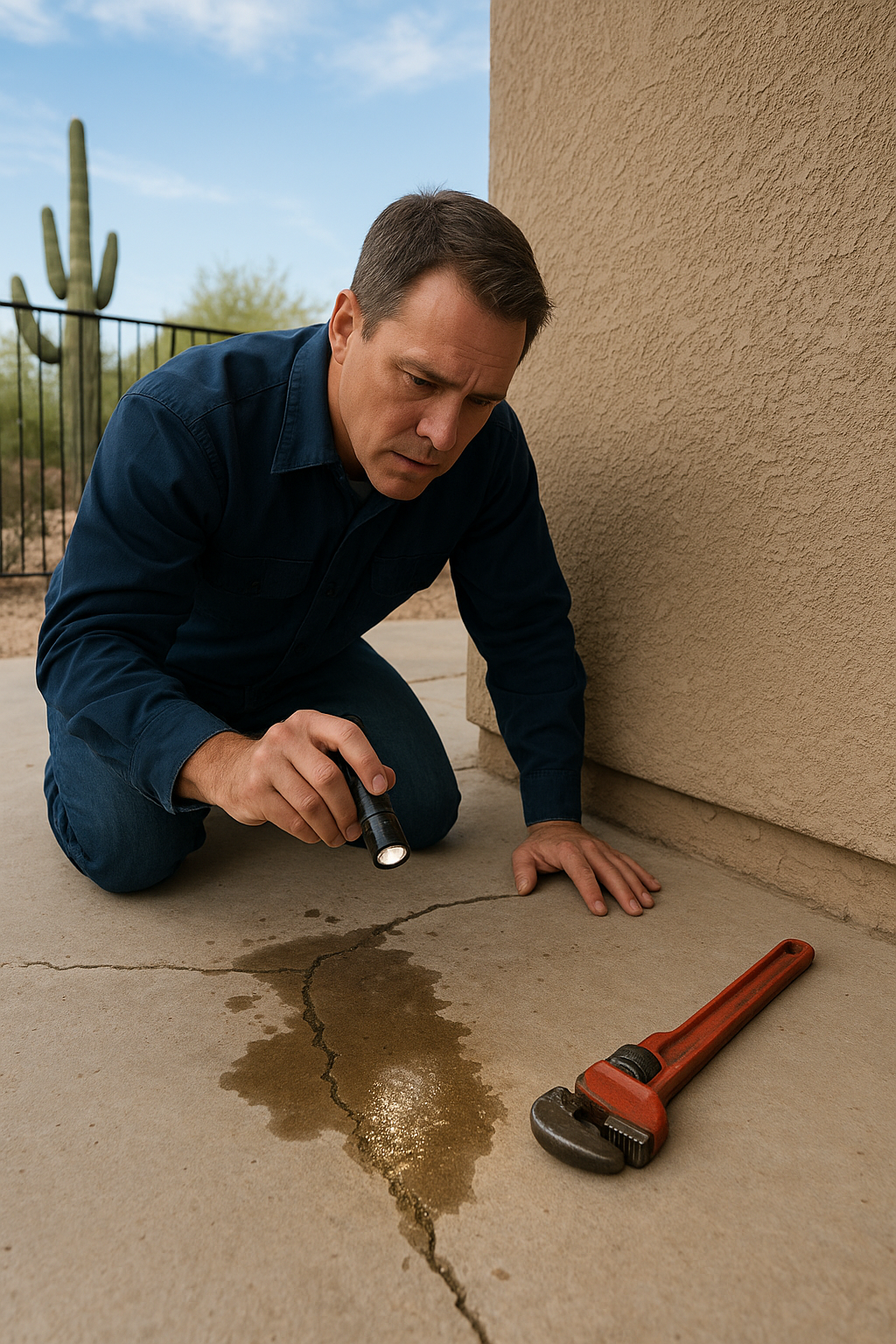
Slab leaks in Phoenix homes typically reveal themselves through sudden increases in water bills of $50 or more per month combined with warm patches on tile floors measuring 5–10 degrees above room temperature. These indicators appear well before visible cracks form in foundations or walls, especially in neighborhoods like Arcadia and Biltmore where many homes rest on concrete slabs built over older copper or galvanized lines. Catching the problem at this stage limits water loss and prevents the extreme summer heat from accelerating soil expansion beneath the slab.
Visible Flooring and Wall Indicators
Homeowners in Phoenix often first notice slab leaks through persistent moisture that darkens grout lines or creates soft spots under carpet in high-traffic areas. In homes near Camelback Mountain or Papago Park, shifting desert soils from temperature swings can widen small pipe pinholes, pushing water upward along the slab edge. Check baseboards for buckling or paint bubbling at floor level, particularly after heavy monsoon rains when groundwater rises. These surface clues usually trace back to hot-water lines under the slab rather than drain pipes. Early detection here avoids the need for full slab replacement that can exceed several thousand dollars once concrete must be broken out.
Water Bill and Pressure Changes
Track monthly usage closely because a slab leak under a Phoenix home can add 10,000–20,000 gallons of unnoticed water loss during peak summer months when irrigation already runs high. A steady drop in water pressure at multiple fixtures while the main valve remains fully open points to an underground breach rather than a fixture issue. Residents in Maryvale and South Mountain report these pressure drops more frequently due to older 1960s–1980s construction with thinner pipe walls exposed to constant 100-plus degree heat. Compare bills from the same season last year; unexplained jumps without increased occupancy signal the need for further checks before the leak undermines the foundation.
Role of Phoenix Heat and Hard Water
The extreme summer heat in Phoenix drives slab leaks by causing repeated expansion and contraction of both pipes and surrounding soil, especially around landmarks like the Desert Botanical Garden where clay-heavy ground amplifies movement. Hard water common across Maricopa County accelerates corrosion on copper lines, creating pinhole leaks that worsen faster than in milder climates. Homes in Camelback East see this combination shorten pipe life to roughly 15–20 years. Linking this to broader pipe wear explains why many properties benefit from proactive monitoring rather than waiting for visible damage.
Professional Confirmation Steps
When signs appear, schedule leak detection that uses electronic listening devices and thermal imaging to pinpoint the exact location without unnecessary concrete removal. Technicians then confirm flow rates and isolate sections of line to verify the leak volume. This approach saves Phoenix homeowners from exploratory demolition that often costs more than the actual slab leak repair. In areas like Ahwatukee, where slabs sit closer to bedrock, accurate location prevents damage to surrounding utilities during excavation.
Next Actions to Limit Damage
Once confirmed, address the leak promptly to stop ongoing moisture that can lead to mold under flooring or further soil erosion beneath the home. Review related pipe longevity factors in Why Phoenix Hard Water Wears Out Water Heaters Faster for context on how mineral buildup contributes across multiple systems. Owners who act on early indicators typically keep total repair costs between $1,200 and $3,500 depending on access method and pipe material replaced.