Phoenix homes built before the 1990s often have black iron pipe runs that corrode where they pass through stucco or touch alkaline soil common in Maricopa County. Extreme summer heat expands and contracts these lines, loosening threaded joints near water heaters and dryers. Technicians check for pinhole leaks by isolating sections and using calibrated manometers rather than soap alone, because daytime temperatures above 110 degrees make small bubbles hard to see.
CSST tubing installed in the 2000s requires bonding verification before any repair. In areas like Ahwatukee and Papago Park, where lightning risk is higher due to open desert terrain, unbonded CSST has caused arcing damage. Repairs here include adding a proper bonding clamp to the electrical ground and replacing any crushed sections with new yellow-jacketed tubing rated for the local pressure.
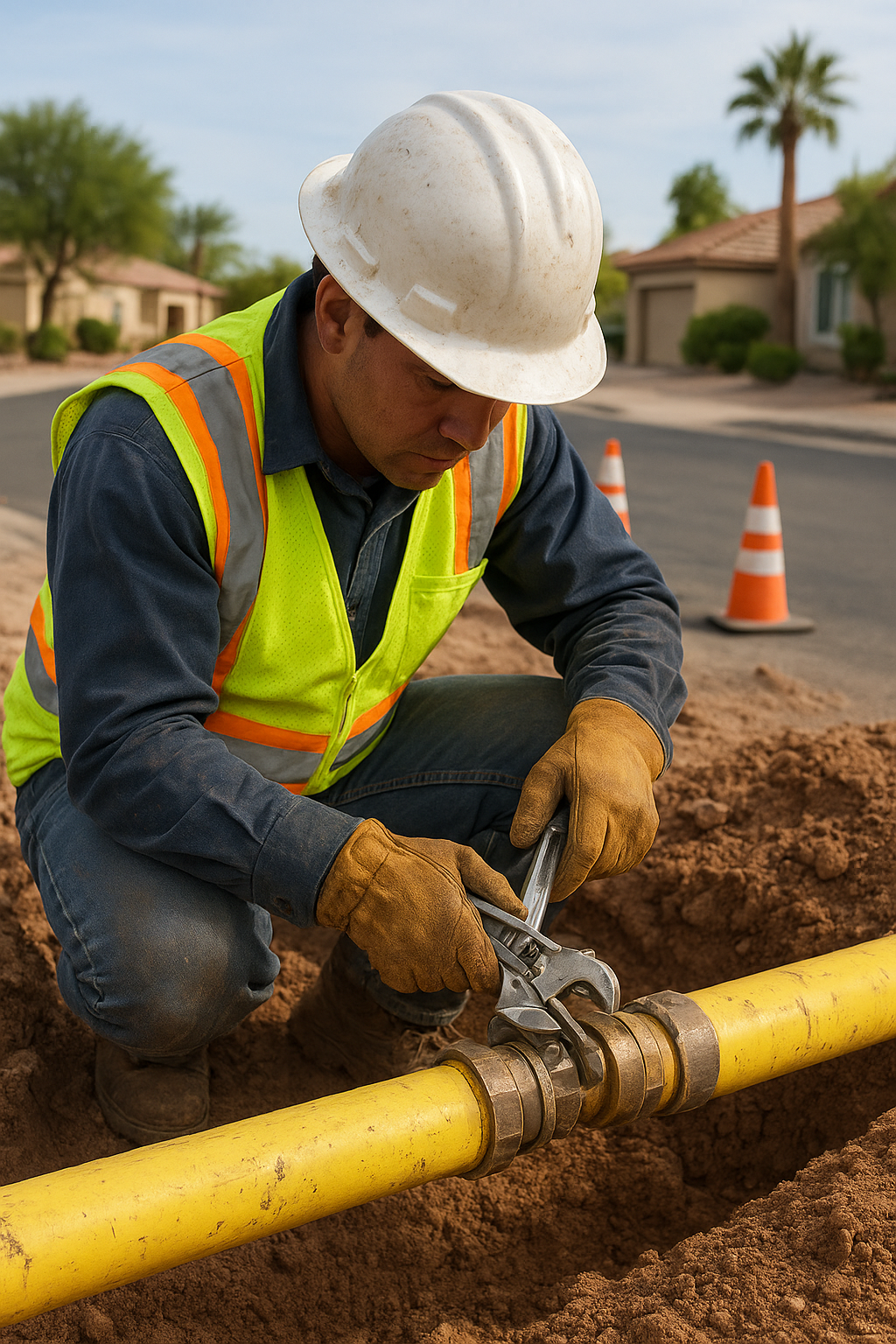
Underground gas lines feeding detached garages or pool heaters in Biltmore and Arcadia frequently shift when monsoon rains saturate the caliche soil. Excavation must follow Maricopa County depth rules and use tracer wire for future locates. Technicians pressure-test the new polyethylene line at 1.5 times operating pressure for 30 minutes before backfill to catch any fitting defects caused by rocky backfill material.
Technician insight
In Phoenix the thing that catches most people out with gas line repair is how fast black iron threads corrode once the protective wrap fails in our alkaline soil. Homeowners in Maryvale and South Mountain often ignore the faint smell until the line is fully compromised because the heat masks the odor. Checking the bond on any CSST before touching anything else prevents a second call later.
Biltmore Home Gas Line Leak
A homeowner noticed a faint odor near the water heater in a 1978 Biltmore house. Pressure testing isolated the leak to a corroded black iron elbow behind the stucco. The section was replaced with new pipe and dielectric unions, then the system was retested at operating pressure before gas was restored.
Gas Line Repair Services We Offer
✓Black Iron Pipe Repair
Threaded joint resealing and section replacement on rigid steel lines common in pre-1990 Phoenix homes.
✓CSST Gas Line Inspection
Visual and bonding check of corrugated stainless tubing plus repair of damaged runs in homes built after 2000.
✓Underground Gas Line Replacement
Trenching and installation of new polyethylene pipe from meter to house or outbuilding with proper tracer wire.
✓Gas Leak Detection
Electronic and pressure testing to locate leaks around water heaters, ranges, and fireplaces in desert heat.
✓Appliance Gas Line Hookups
New flexible connector installation and shutoff valve replacement for stoves, dryers, and pool heaters.
Gas Line Repair Cost in Phoenix, AZ
| Service | Typical Range | What Affects It |
|---|---|---|
| Above-ground leak repair | $250–$550 | Varies by pipe type and location inside home |
| CSST bonding and inspection | $150–$300 | Includes clamp installation if missing |
| Underground line replacement | $800–$1800 | Trench length and soil conditions affect final cost |
| Appliance hookup repair | $175–$350 | Connector and valve replacement only |
Ranges are typical for Phoenix, AZ and confirmed with an exact written quote before any work starts.
How it works
- 1
Shutoff And Safety Check
Locate the main gas valve at the meter and confirm zero pressure on the line before any work begins.
- 2
Leak Isolation
Use manometer testing on separate branches to pinpoint the affected section without removing walls unnecessarily.
- 3
Material Assessment
Determine whether black iron, CSST, or polyethylene is present and verify code compliance for the neighborhood.
- 4
Repair And Retest
Replace or reseal the faulty section, then re-pressure test the entire system before restoring gas service.
Pricing
Upfront quote after on-site inspection; price depends on access, pipe material, and whether excavation is required.