Phoenix hard water leaves thick calcium and lime scale inside fill valves and flappers within a few seasons, turning minor drips into constant running that wastes water and raises bills. Homes built before the 1980s in Camelback East and Arcadia often still have original brass or early plastic parts that crack under the pressure swings common during peak summer demand. Technicians carry replacement seals rated for 140-degree supply temperatures because attic lines can reach that heat by midday. Ignoring the scale also risks overflow into Papago Park-area yards where soil already drains poorly.
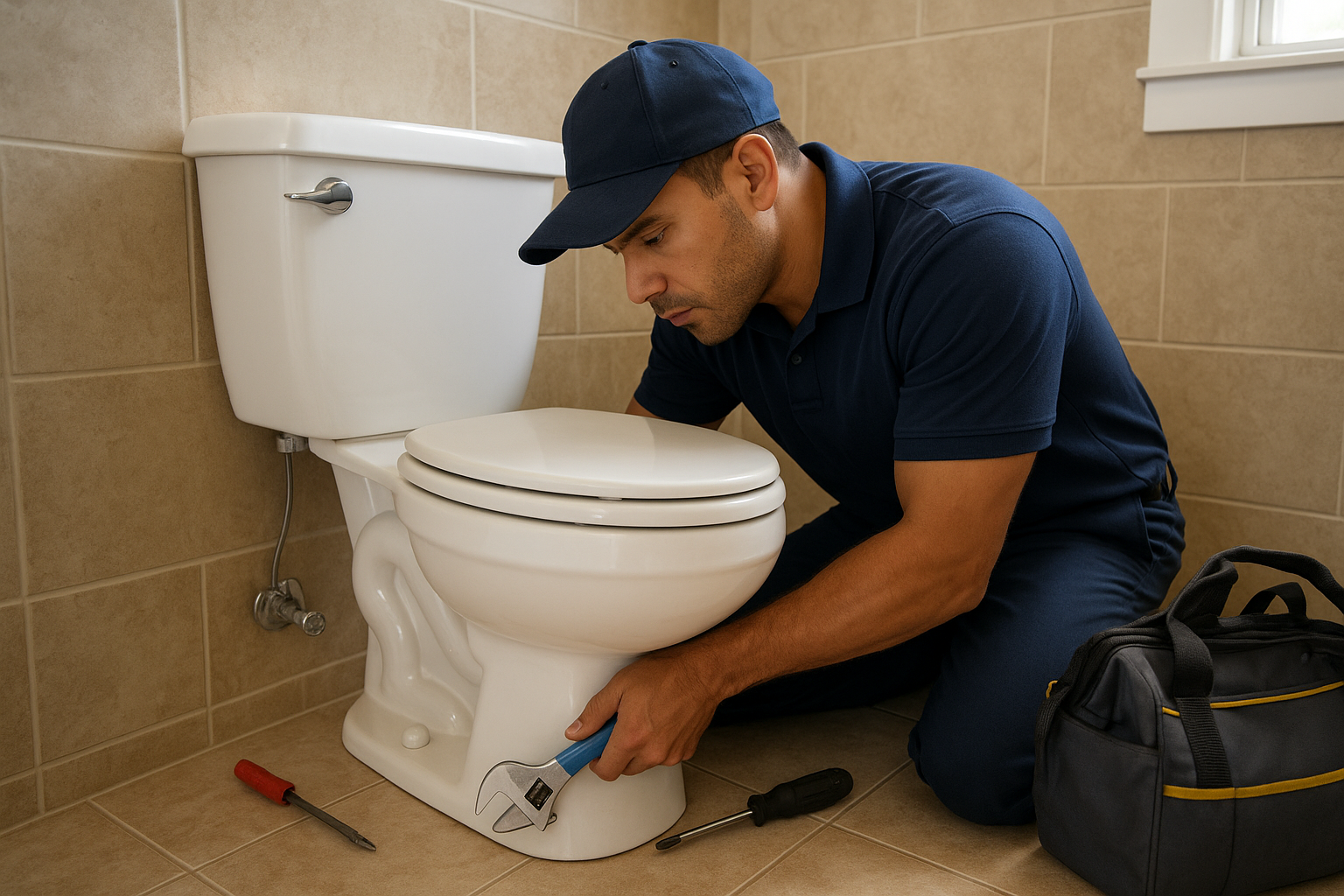
South Mountain and Maryvale properties frequently sit on clay-heavy soil that shifts with monsoon moisture, stressing the wax ring and closet flange until leaks appear at the base. A proper repair here means pulling the toilet, checking the flange for rot, and sometimes adding a reinforced ring rather than a standard wax seal. Technicians also inspect the shutoff valve behind the tank because decades-old gate valves in these neighborhoods seize when turned, forcing an emergency line shutoff at the meter. Skipping this step turns a simple job into an all-day water shutoff.
Biltmore and Ahwatukee homes with low-flow toilets installed in the 1990s now show cracked tanks from repeated thermal expansion during 110-degree days. Repair often involves epoxy-rated patches or full tank swaps using vitreous china matched to the existing bowl to keep the original footprint. Code in Maricopa County requires any visible leak repair to include a new supply line with a quarter-turn ball valve, so technicians stock these on the truck to finish in one visit.
Technician insight
In Phoenix the thing that catches most people out with toilet repair is how fast hard water scale locks up the fill valve in older Arcadia and Biltmore homes; what looks like a simple flapper swap often turns into cutting out a corroded brass shank because the desert supply leaves deposits that expand in summer heat.
Base leak after monsoon in South Mountain
Homeowner noticed water at the toilet base following heavy rain. Inspection showed the wax ring had failed because clay soil had shifted the flange slightly. We pulled the toilet, replaced the flange bolts and installed a reinforced ring plus new supply line. Leak stopped and the floor stayed dry through the next storm.
Toilet Repair Services We Offer
✓Running Toilet Repair
Diagnose and replace fill valves, flappers, or flush valves clogged by Phoenix hard-water scale that causes nonstop running and high water bills.
✓Base Leak and Wax Ring Replacement
Remove the toilet, inspect the flange for rot common in shifting Maricopa clay, and install a reinforced wax ring plus new bolts to stop floor leaks.
✓Tank Crack Repair
Assess hairline cracks in older tanks stressed by extreme summer heat and either patch with code-approved epoxy or swap the tank while preserving the bowl.
✓Flush Handle and Trip Arm Replacement
Replace corroded handles and arms that break from repeated use and mineral deposits, restoring smooth single-flush operation without chain adjustments.
✓Supply Valve and Line Service
Replace seized shutoff valves behind toilets in pre-1980 homes and install new braided stainless lines rated for Phoenix attic temperatures.
Toilet Repair Cost in Phoenix, AZ
| Service | Typical Range | What Affects It |
|---|---|---|
| Running toilet fix (valve and flapper) | $175–$325 | Higher when old brass parts must be cut out in pre-1970 homes. |
| Wax ring and base leak repair | $250–$450 | Increases if flange replacement or subfloor work is required. |
| Tank crack patch or swap | $300–$550 | Price moves with tank model availability and whether bowl must be reset. |
| Supply valve and line replacement | $150–$275 | Lower when valve turns freely; higher when seized. |
Ranges are typical for Phoenix, AZ and confirmed with an exact written quote before any work starts.
How it works
- 1
On-Site Inspection
Tech checks water pressure, listens for fill-valve noise, and examines the base for moisture while noting the home's age and neighborhood soil type.
- 2
Diagnosis And Quote
Identify the exact failing component, explain options, and provide a written range before any parts are removed.
- 3
Repair And Part Swap
Shut off water, remove old parts, clean scale, install new components, and reseat the toilet with fresh hardware.
- 4
Test And Cleanup
Refill, flush multiple times, check for leaks, and wipe the area so the bathroom is ready for immediate use.
Pricing
Most toilet repairs in Phoenix fall between $175 and $550 depending on parts and access.