2026-08-29 · Ray Callahan
Tankless vs Tank Water Heaters for Phoenix Homes
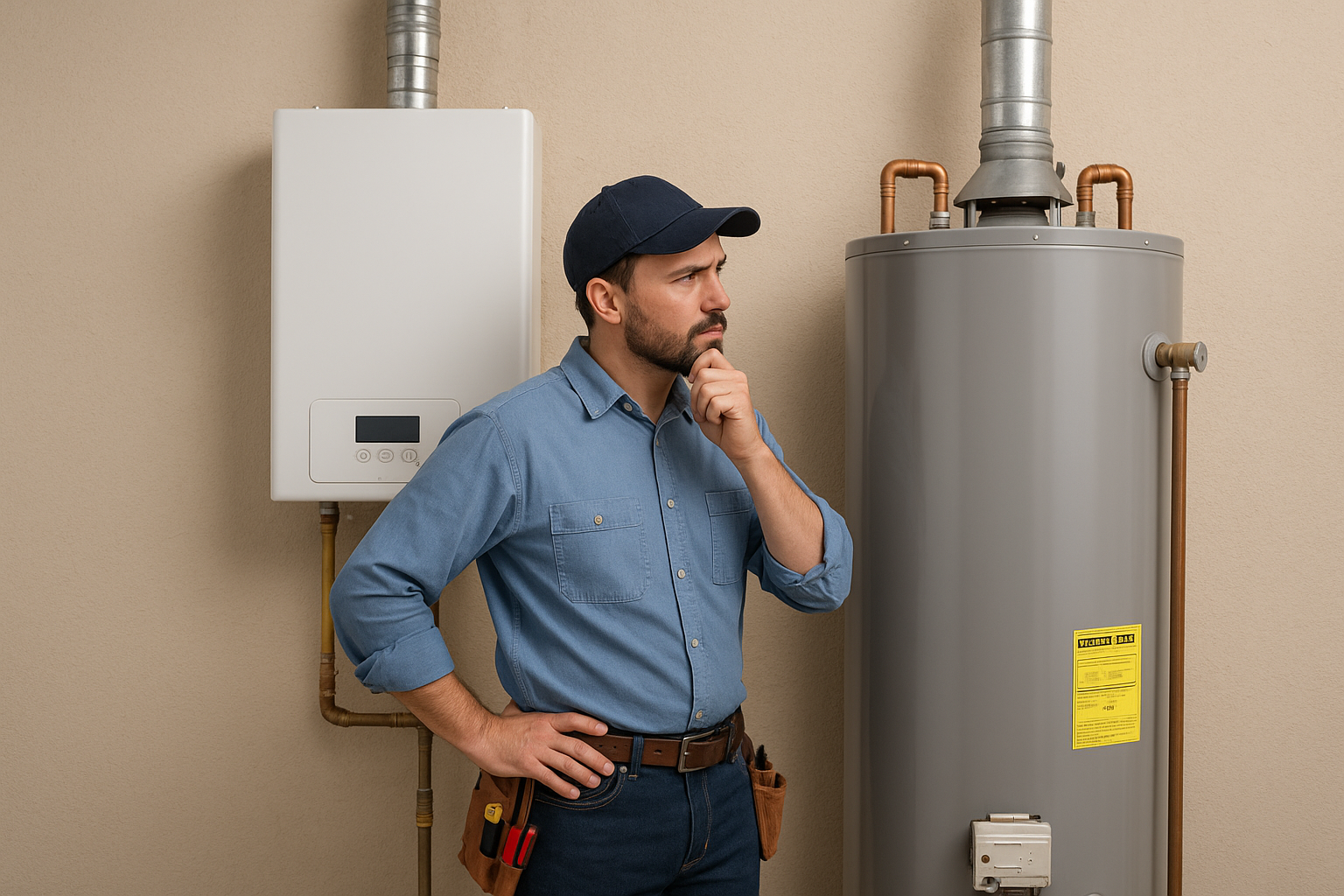
For most Phoenix homes, traditional tank water heaters deliver reliable hot water for 8–12 years at lower upfront costs of $800–$2,000 installed, while tankless models last 15–20 years but require $2,500–$5,000 to install and can limit simultaneous high-flow uses common in family households.
Lifespan in Phoenix Conditions
The hot desert climate accelerates wear on both styles through constant thermal cycling and sediment buildup from hard water. A standard 40- or 50-gallon tank unit in neighborhoods such as Maryvale or South Mountain typically reaches replacement around year 10 when anode rods are neglected. Tankless units avoid tank corrosion yet still suffer scale accumulation on heat exchangers, often requiring descaling every 12–18 months to hit the upper end of their 15–20 year range. Homeowners in Arcadia and Biltmore frequently report earlier failures when units sit in unconditioned garages exposed to 110-plus degree days.
Energy Use and Operating Costs
Tank models lose 10–20 percent of stored heat through the tank walls even when idle, driving higher monthly gas or electric bills during Phoenix's long cooling season. Tankless units heat water only on demand and can cut energy use by 20–30 percent for smaller households that rarely run multiple showers at once. Larger homes near Camelback Mountain with frequent guest use often see the savings erased by the need for multiple units or oversized single units that still cycle frequently. Real-world utility statements from Central City residents show average annual savings of $150–$300 after switching, provided the unit is properly sized.
Hard Water and Maintenance Demands
Phoenix water leaves mineral deposits that coat heating elements and reduce efficiency within the first two years. Why Phoenix Hard Water Wears Out Water Heaters Faster explains how flushing a tank every six months and installing a whole-house softener extends service life. Tankless systems need annual vinegar flushing or professional descaling to prevent flow restriction; skipping this step in Ahwatukee or Camelback East homes commonly triggers error codes by year five. Both styles benefit from water heater repair calls when flow drops or temperatures fluctuate.
Installation Factors for Local Homes
Retrofitting a tankless unit often requires upsizing gas lines or adding dedicated electrical circuits, especially in older construction found in Encanto or Garfield. Tank replacements usually fit the same footprint and venting, keeping labor under four hours. Water heater installation crews note that homes built before 1990 frequently need additional seismic strapping and expansion tanks to meet current code. Tankless units also demand minimum flow rates of 0.5 gallons per minute, which can affect low-flow fixtures installed during recent remodels.
Deciding Between the Two Options
Homes with two or fewer occupants and limited simultaneous demand often realize the best return from a tankless unit paired with a water softener. Larger families or properties with multiple bathrooms in areas such as Biltmore or Desert Ridge typically stay with a high-recovery tank model or add a second smaller tank. Review your last twelve months of utility bills and peak usage patterns before committing; a site visit from a local plumber confirms venting clearances and gas capacity without guesswork.