2026-08-29 · Ray Callahan
Why Phoenix Hard Water Wears Out Water Heaters Faster
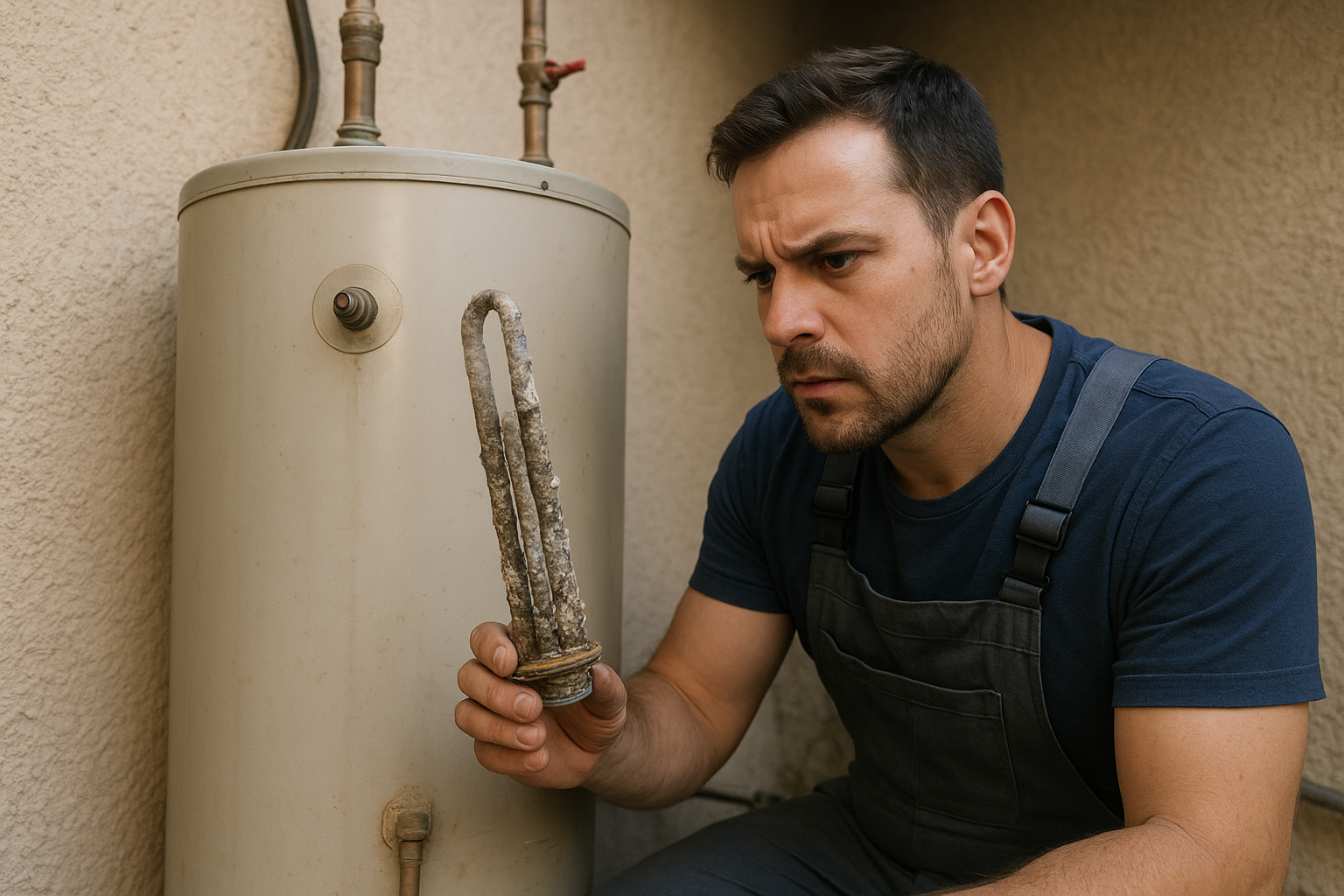
Phoenix hard water deposits calcium and magnesium scale that insulates heating elements and tank walls, cutting typical water heater lifespan from the national 12–15 years down to 8–12 years in most Maricopa County homes. The extreme summer heat compounds the issue by forcing units to work harder during peak demand months when incoming water temperatures rise.
Mineral Scale Formation in Desert Water
Phoenix tap water carries 12–20 grains of hardness per gallon, far above the national average. Each time a water heater cycles, dissolved minerals precipitate as limescale on the tank bottom and around the heating element or gas burner. Over 18–24 months this layer can reach 1/8 inch thick, forcing the burner or element to run 20–30 % longer to reach the same temperature. The extra runtime raises energy use and internal temperatures, which in turn speeds further scaling in a self-reinforcing loop. Homeowners in Arcadia and Biltmore notice the pattern first because older homes there often have 40- and 50-gallon tanks that sit at 120 °F year-round. Regular flushing removes loose sediment but does not dissolve the bonded scale; once it hardens, only acid deliming or replacement restores efficiency.
How Scale Damages Heating Components
Electric elements coated with scale overheat and burn out within 3–5 years instead of the 8–10 years seen in soft-water regions. Gas water heaters develop hot spots on the tank bottom that warp the glass lining and create pinhole leaks. In both cases the thermostat works harder to maintain set temperature, shortening its own life. The result is a unit that still produces hot water but at steadily declining efficiency until it fails during the July–August heat when demand peaks. Valley Plumbing Phoenix technicians see failed elements and leaking tanks most often in homes built between 1995 and 2010 that have never been delimed. Because the city’s water chemistry stays consistent across neighborhoods, the wear pattern appears in Camelback East, Maryvale, and South Mountain alike.
Local Climate and Usage Patterns
Phoenix summers push groundwater temperatures above 85 °F, so water heaters cycle more frequently even without heavy household use. Combined with 300-plus days of sun and low rainfall, the mineral concentration in supply lines stays high. Residents who run irrigation systems or fill pools draw extra volume through the heater, moving more minerals across the tank surface each month. These conditions explain why a 50-gallon unit installed in 2015 may already require water heater repair by 2023, while the same model lasts longer in cooler climates. The pattern holds across Ahwatukee and North Central Phoenix because the municipal supply source remains the same.
Monitoring Lifespan and Planning Replacement
Track your water heater age by the serial number on the data plate. Once it reaches seven years, schedule annual inspection for scale thickness and anode rod condition. If the rod is depleted and the tank shows 1/4 inch of scale, replacement before the next summer peak prevents emergency calls. Many Phoenix homeowners choose a tankless water heater at this point because the units have no tank to scale and maintain steady output even when inlet water is 85 °F. Compare options in the guide Tankless vs Tank Water Heaters for Phoenix Homes to see flow-rate calculations specific to local groundwater temperatures.
When Repair Extends Service Life
If scale is caught early, acid flushing plus a new anode rod can add 2–4 years to an otherwise sound tank. Technicians isolate the unit, circulate a mild acid solution for two hours, then neutralize and flush. This service costs less than replacement yet restores heat-transfer efficiency. It works best on units under nine years old with intact glass lining. Homes in Desert Ridge and Moon Valley that still have original 1990s tanks usually skip this step and move directly to replacement because the lining has already failed. The decision hinges on visible rust in the drain water and age, not on price alone.